Fiscal SOS: Mongolia’s Government Faces Budget Emergency

Khulan M.
June 23, 2025
June 23, 2025
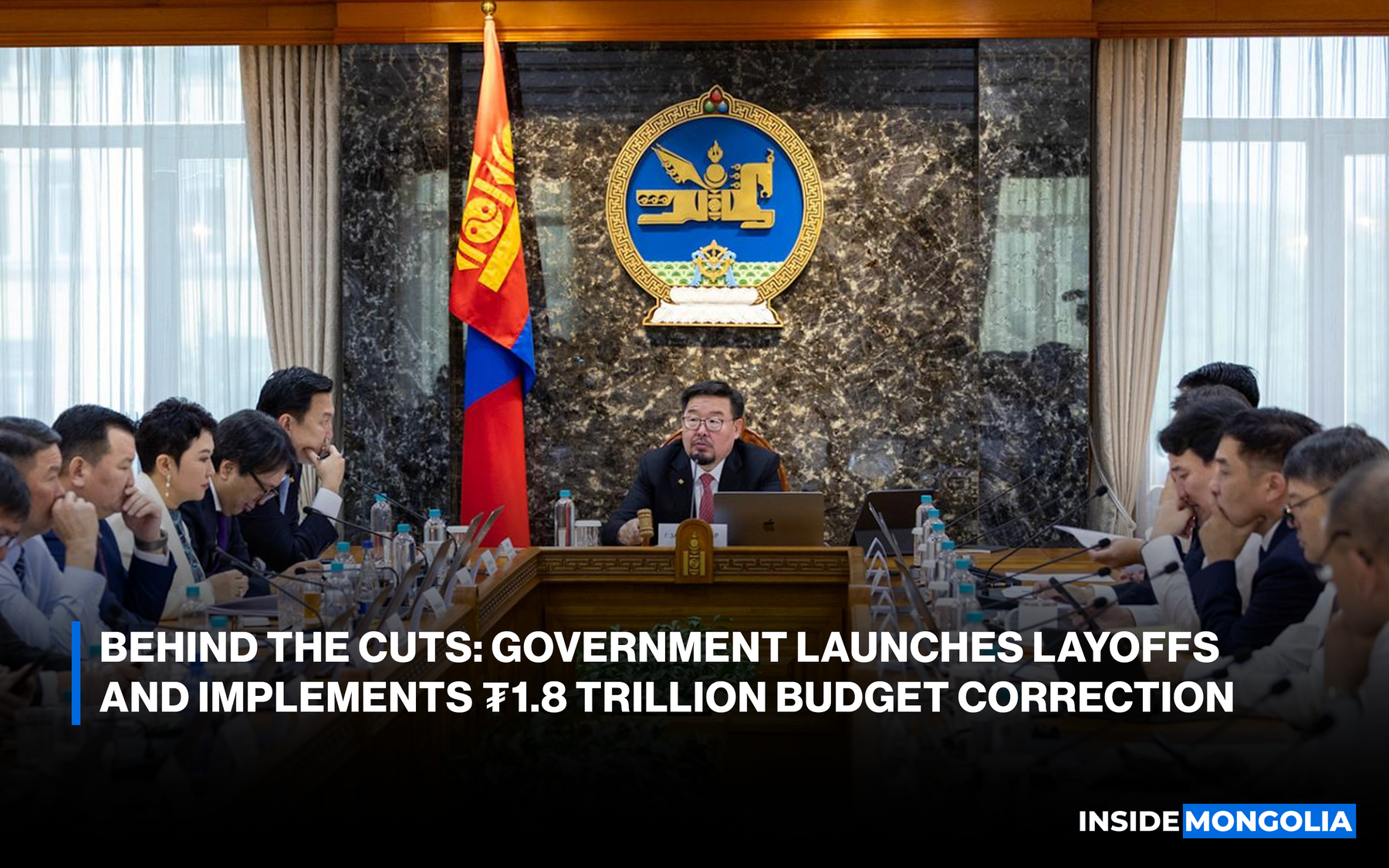
Mongolia’s new government under Prime Minister G.Zandanshatar rushes to address a mounting fiscal deficit and entrenched public sector inefficiencies by announcing widespread layoffs and a ₮1.8 trillion budget amendment.
🏃➡️ Mass Layoffs Target Overlapping Bureaucracy
The Government of Mongolia has begun implementing a plan to cut 14,400 civil service positions, part of a broader mandate passed by Parliament to reduce public sector employment by 9% by 2026. In the first phase, 16 ministries will eliminate approximately 1,900 positions, equivalent to a 20% staff reduction, by identifying and removing overlapping functions.
- ⛩️ In parallel, 30 of the country’s 60 national committees are set to be dissolved as part of efforts to streamline governance.
🆘 Emergency Budget Amendment
The layoffs accompany an emergency revision to the 2025 state budget. Mongolia’s budget took a major hit in the first half of the year, with revenues falling short by ₮2.5 trillion. In response, the new PM has announced plans to cut government spending by ₮2.3 trillion as part of the emergency budget revision.
- 🪽 To offset this, ₮535 billion will be covered under the Law on State Savings, through the cancellation of 1,030 projects and programs that had not been procured by May 31. The remaining ₮1.8 trillion gap is expected to be corrected through formal budget cuts.
📉 Budget Reductions
Although the government pledged to apply the smallest budget reductions to the Education and Health ministries, the Ministry of Health ultimately faced the largest cut of ₮69.9 billion. Other affected ministries include:
- Urban Development and Housing: ₮36 billion
- Education and Science: ₮33 billion
- Road Transport and Development: ₮33 billion
- Culture, Sports, and Tourism: ₮19.7 billion
- Other ministries: ₮120.7 billion in collective reductions.
Finally… Mongolians have long called for a leaner, more efficient government. But what’s more striking, and concerning, is the narrow focus of ministry-level discussions, which remain focused on headcount reductions rather than structural reform. Without clear criteria for performance or transparency in the selection process, there is a growing risk that ordinary staff will bear the brunt of these layoffs, while politically appointed managers and backdoor hires remain unscathed.
Comment