Mongolia’s Coal to Solar Hope
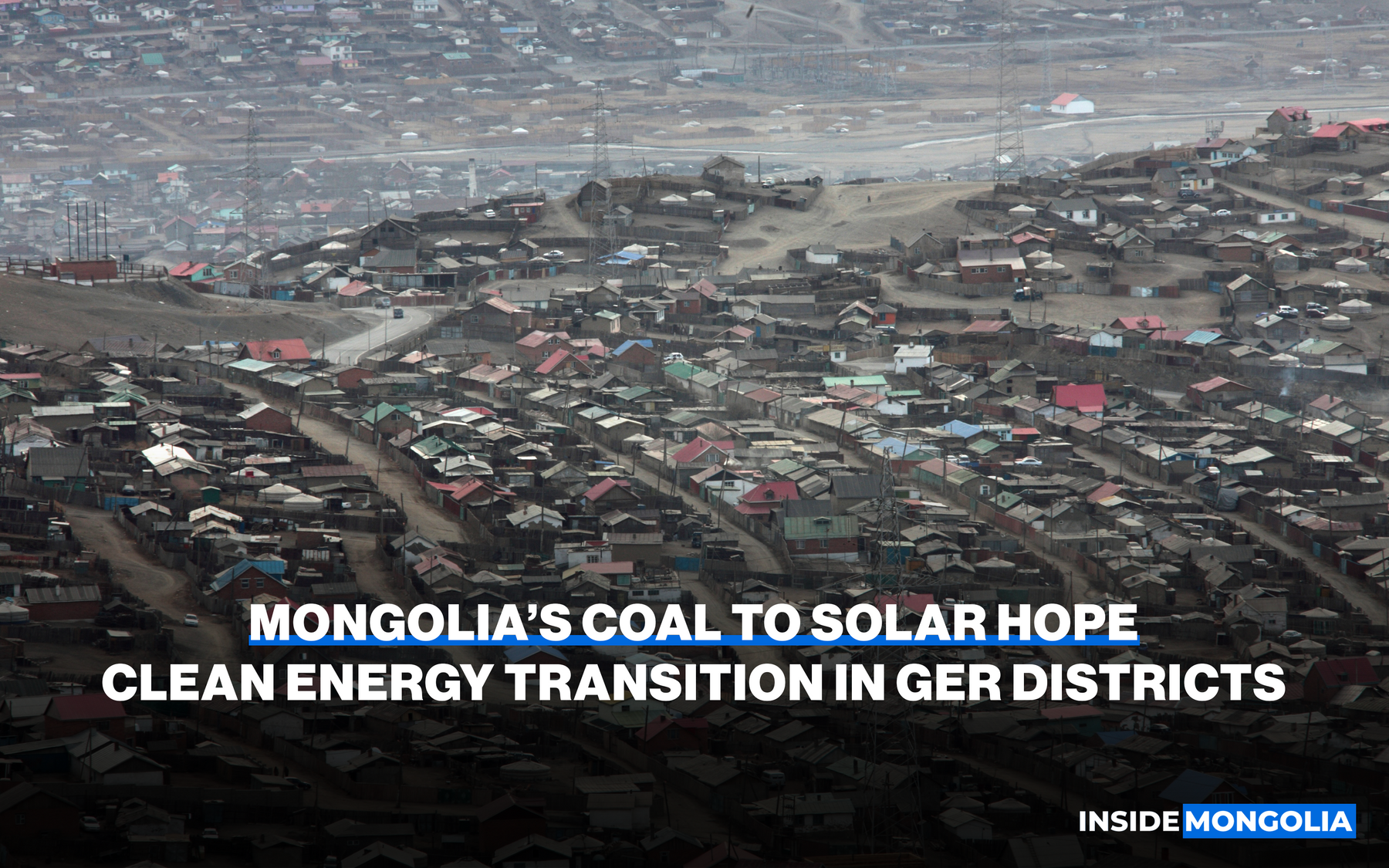
In Ulaanbaatar’s harsh winters, families in traditional gers wake multiple times each night to feed coal into stoves just to stay warm. This long-standing nomadic practice comes at a high cost: coal burning makes the capital one of the world’s most polluted cities.
- 🛖 Each ger household emits 12–15 tonnes of CO₂ annually, while toxic smog and carbon monoxide create severe health risks every winter.
A Homegrown Solution: The Coal-to-Solar Initiative
URECA’s “Coal-to-Solar” initiative offers tangible hope for Mongolia’s ger districts. Founded in 2021, the Singapore-based Mongolian climate-tech company launched its first pilot in March 2022, installing solar energy systems for five households in partnership with The Asia Foundation and GerHub NGO. Each system, 1.8–5kW solar panels, battery storage, electric heaters, and improved insulation, replaced coal and wood with renewable energy.
From 2023, the initiative expanded with UNDP and other partners, including programs focused on women’s climate resilience. In 2024–2025, URECA partnered with the EBRD under its Star Venture Programme to scale operations further.
- 👩💻 What is the Solution? The initiative provides affordable solar systems combined with carbon finance to help ger households switch to clean energy. AI verifies emission reductions, generating carbon credits that families can sell to fund their transition.
👆 Real Impact
After 2 years, nearly 200 households adopted the system, enduring multiple winters without coal. Families report cleaner air, fewer illnesses, better sleep, and improved well-being. Each household avoids up to 15 tonnes of CO₂ annually. Scaling to 100,000+ homes by 2030 could reduce 1.3 million tonnes of CO₂ and cut Ulaanbaatar’s air pollution by over 70%.
- The Result: Beyond household adoption, URECA achieved Gold Standard certification for its carbon credits in early 2026, supported by the EBRD Star Venture Programme and the European Union.
A Just Transition for Mongolia
URECA’s approach prioritizes the most affected, low-income communities. Families become active participants in carbon markets, earning from their own reductions. As Founder E.Orchlon notes, long-term success relies on market fundamentals, not just aid.
With Mongolia’s vast solar and wind potential, this grassroots model demonstrates that clean energy works even in the coldest capital, proving that our nomadic spirit can adapt clean, sustainable, and self-reliant living for future generations.
Comment