18.4% of Mongolia’s Workforce is in the Public Sector
Khulan M.
April 20, 2026
April 20, 2026
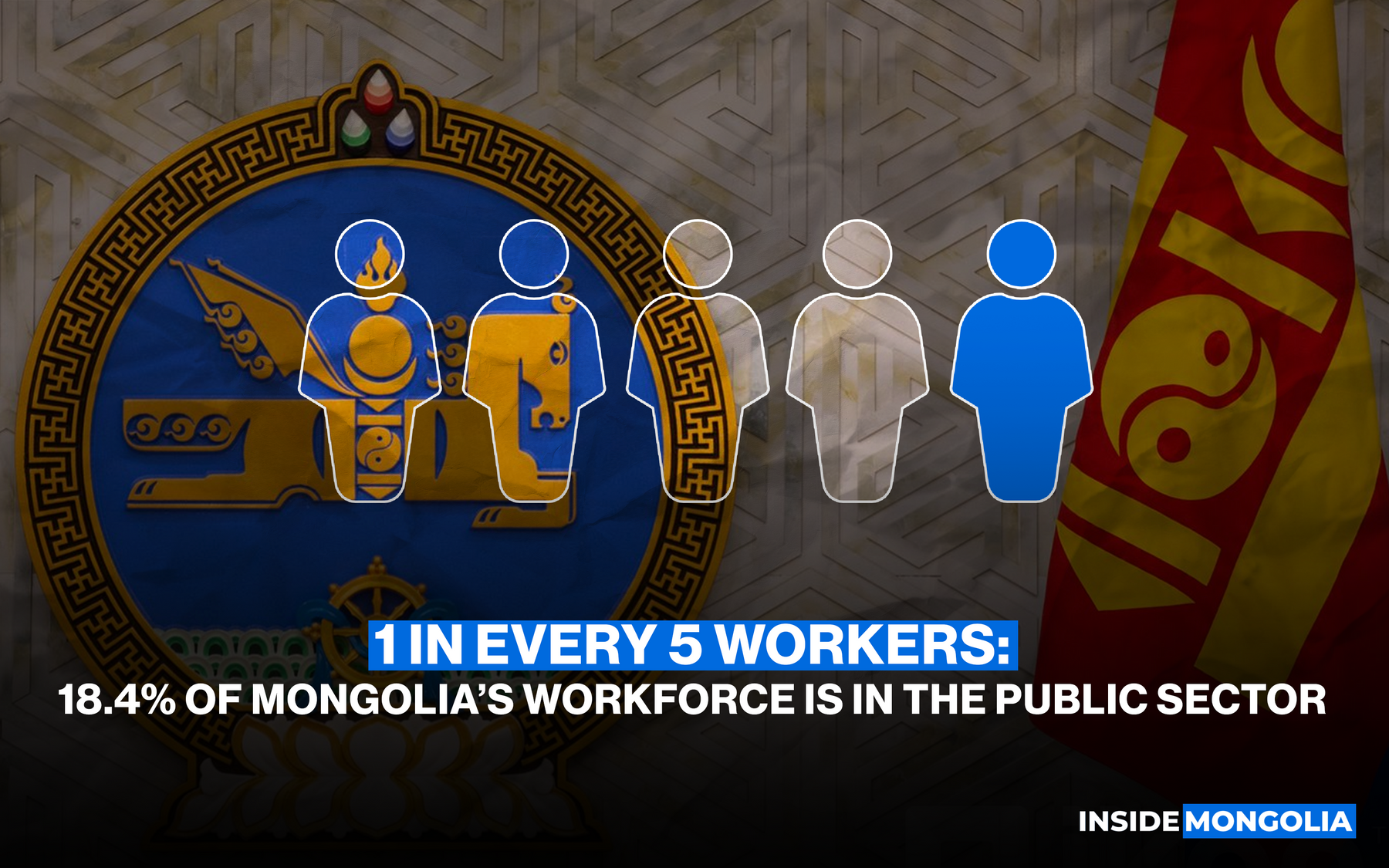
Mongolia has a population of around 3.5 million, of which 266,895 are civil servants, accounting for 6.4% of the total population. Within the labor force of 1.4 million, this translates to 18.4%, or roughly 1 in every 5 workers, employed in the public sector, making it one of the largest employers in the country.
👩💼 Workforce Snapshot
Mongolia’s civil service workforce is both young and well-educated. The average age stands at 39, with nearly 60% of employees in the prime working range of 25–45, while just 1.8% are over 60, suggesting a relatively limited pool of senior-level experience. At the same time, qualification levels remain strong, with more than 72% holding a bachelor’s degree or higher.
⚖️ Gender Dynamics
A clear gender imbalance is evident as women make up 64.3% of civil servants, dominating administrative and service roles, while men are more represented in political and specialized positions. As a result, many institutions fall short of the recommended 40:60 balance.
- 🔄 Experience Gap: The workforce is relatively new, with over 35% having less than 5 years of experience. While this reflects steady recruitment, it also raises concerns around institutional memory and long-term capacity.
- 📍 Geographic Concentration: Furthermore, more than half, or 52.7% of civil servants are based in Ulaanbaatar, highlighting a strong concentration in the capital.
🌍 Global Context
As you can see, Mongolia’s public sector is relatively large. While public employment averages around 11% worldwide and 18% in OECD countries, Mongolia’s 18% places it above the global norm and close to advanced economy levels. This reflects the state’s key role in service delivery, particularly in rural areas, but also raises questions around efficiency and sustainability.
Overall, the government is moving to streamline and improve the productivity of the civil service. The push is timely. Despite its size, the public sector is often criticized for slow, bureaucratic processes. There is also a broader structural concern. When the state employs such a large share of the workforce, it can crowd out the private sector, tightening the talent pool for businesses. In effect, the government risks becoming one of the largest competitors for labor in the market, raising important questions about balance, efficiency, and long-term growth.
Comment