If It Wasn’t in Mongolia…
Khulan M.
February 9, 2026
February 9, 2026
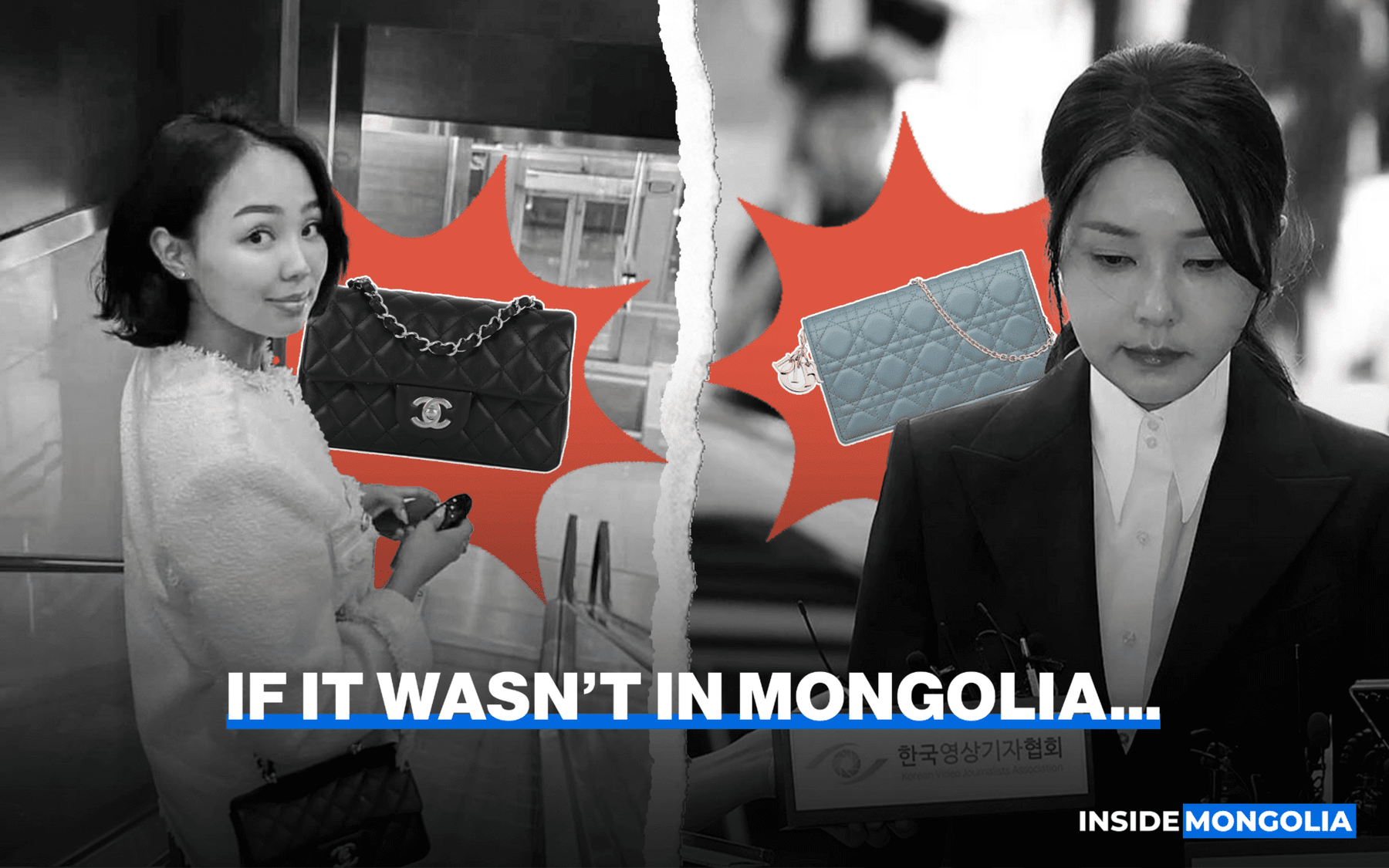
Have you ever watched Marvel’s “What If?” series? Just like its name, it makes you wonder, what if the things that happen in Mongolia happened in another country? How would they change? How would they be decided?
💰🛍️ Luxury Bags That Shake Up Politics
South Korea’s ex-first lady was jailed for 20 months for bribery, her love for luxury handbags at the center of a political firestorm. She was accused of accepting a $2,200 Christian Dior bag as a gift. Ironically, a similar scandal unfolded in Mongolia last year: the ex-outside PM’s daughter-in-law carried a $5,000 Chanel handbag. Both cases started with luxury, but the endings diverged. In Mongolia, the Anti-Corruption Agency declared that the funds used by the PM’s son, O. Temuulen, were legally obtained, although the financial reports of Hero Entertainment Group, the source of the wealth, remained unclear.
😷👨⚕️ Doctors’ Salaries: Worlds Apart
While luxury scandals make headlines, the everyday realities of Mongolians often go unnoticed. Doctors, among the world’s highest-earning professions, earn far less in Mongolia. Annual salaries range from $4,500–$7,800, compared to $264,000 in Switzerland and $261,000 in the USA. Even mid-range salaries in Taiwan ($123,700) or China ($92,600) dwarf Mongolia’s. Low pay remains a persistent challenge, highlighting that in Mongolia, public servants often earn the least among state-funded professions.
🤔 How Do Mining Dependent Economies Benefit Their Citizens?
Ahead of the Lunar New Year, the government usually distributes money to ease citizens’ burdens. This time is no different, as MP S. Byambatsogt announced that the Prime Minister will soon deliver “good news” on long-discussed natural resource benefits. Remember, last year the government handed out $96 per person in 2 installments ahead of the Lunar New Year to temporarily ease household pressures.
- Meanwhile, Kazakhstan, which is similar to us in many ways, is working to reduce its dependence on oil by ramping up exploration of rare earth elements and investing heavily. At the same time, it is addressing its energy challenges, investing $24 billion in energy modernization.
Finally… From luxury handbags to low doctor salaries and mining wealth management, Mongolia often presents scenarios that would seem extraordinary elsewhere. Yet, these realities shape daily life, politics, and public expectations, reminding us that in Mongolia, the unexpected is often the norm.
Comment