In Mongolia: Beef Is Rising Faster Than Pay

Khulan M.
September 21, 2026
September 21, 2026
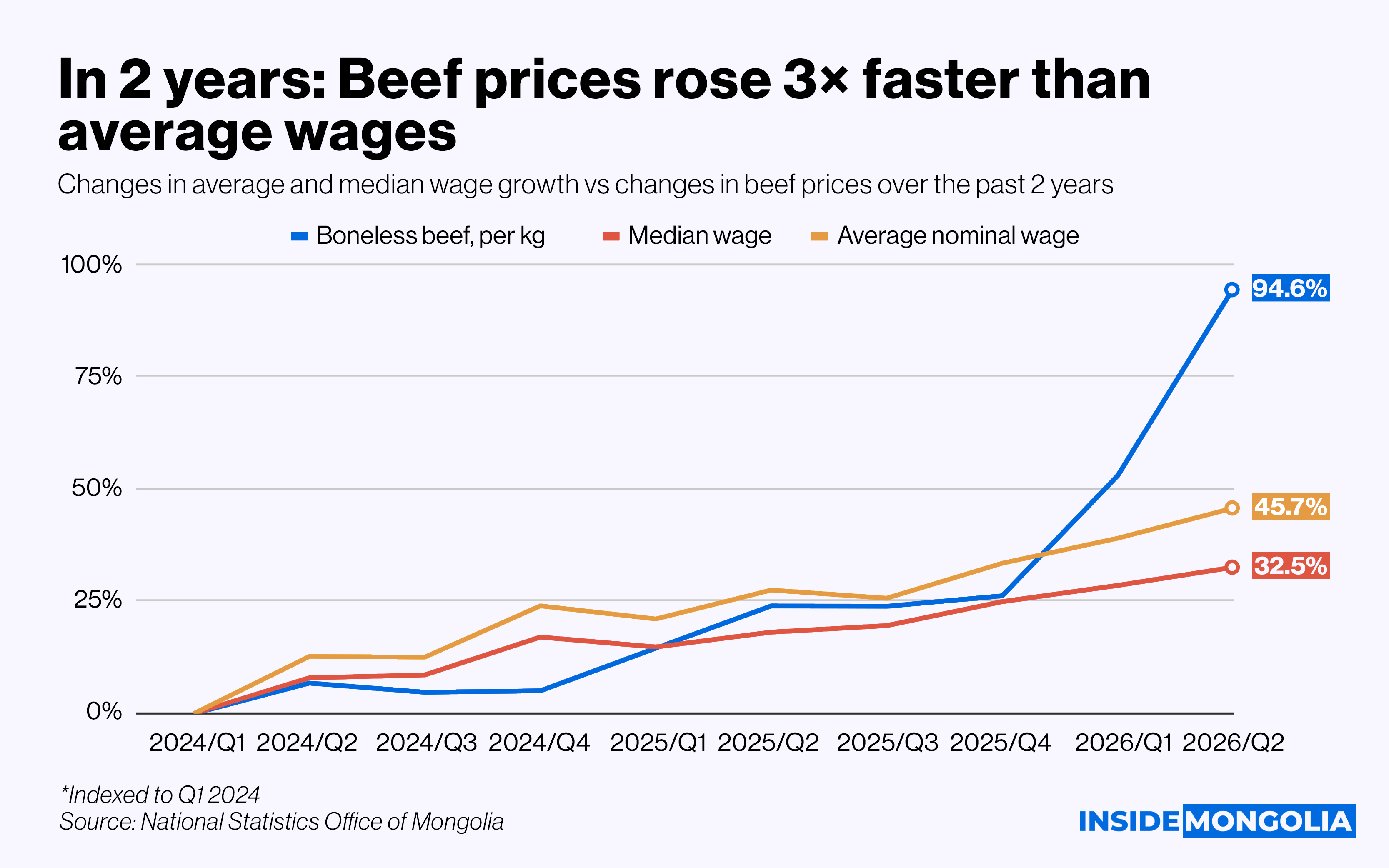
At the start of 2024, Mongolians could buy 100 kgs of beef with their monthly salary. Today, that same salary buys just 68 kgs. In short, meat prices have risen far faster than wages over the past 2 years.
🥴 A Widening 2-Year Gap
Since the first quarter of 2024, the price of boneless beef has surged 94.6%, nearly doubling. Over the same period, Mongolia’s average monthly wage rose 32.5% to ₮3 million, while the median wage increased 45.7% to ₮2.6 million. In other words, beef prices have risen almost 3 times faster than the average wage.
- 👇 Things Got Worse in 2026: The divergence was not steady. By the end of 2025, meat-price growth was still broadly in line with wage growth. That changed in the first half of 2026. Beef prices jumped another 54%, while wages increased by just 6%.
🔻 Real Wages are Falling
The pressure is also showing up in real incomes. In the latest quarter, nominal wages rose 3.1% quarter-on-quarter to ₮3 million. But with consumer prices increasing by 5%, the real wage index fell 1.8%. After taxes and social insurance contributions, an average employee takes home roughly ₮2.4 million.
- ⁉️ The Impact is Uneven: The faster growth in median wages suggests that lower, and middle income earnings have been catching up with the average. But 12.3% of workers still earn ₮792,000 or less per month.
For households with lower incomes, which typically devote a larger share of their budgets to food, the surge in meat prices can be particularly significant. The impact also varies sharply across industries. Average monthly pay is around ₮2 million in accommodation and food services, compared with ₮5.4 million in mining, highlighting how differently the same food-price shock can affect households across Mongolia’s labor market.
Finally… Wages in Mongolia are rising. But food and other consumer prices are rising faster, leaving workers able to buy less with each month’s paycheck. For an economy where meat is a major part of the household food basket, the shrinking amount of beef that a monthly salary can buy offers a simple measure of how quickly purchasing power is being eroded.
Comment