Mongolia’s Public Transport Revenue Spikes 69% After T-money Exit
Khulan M.
April 6, 2026
April 6, 2026
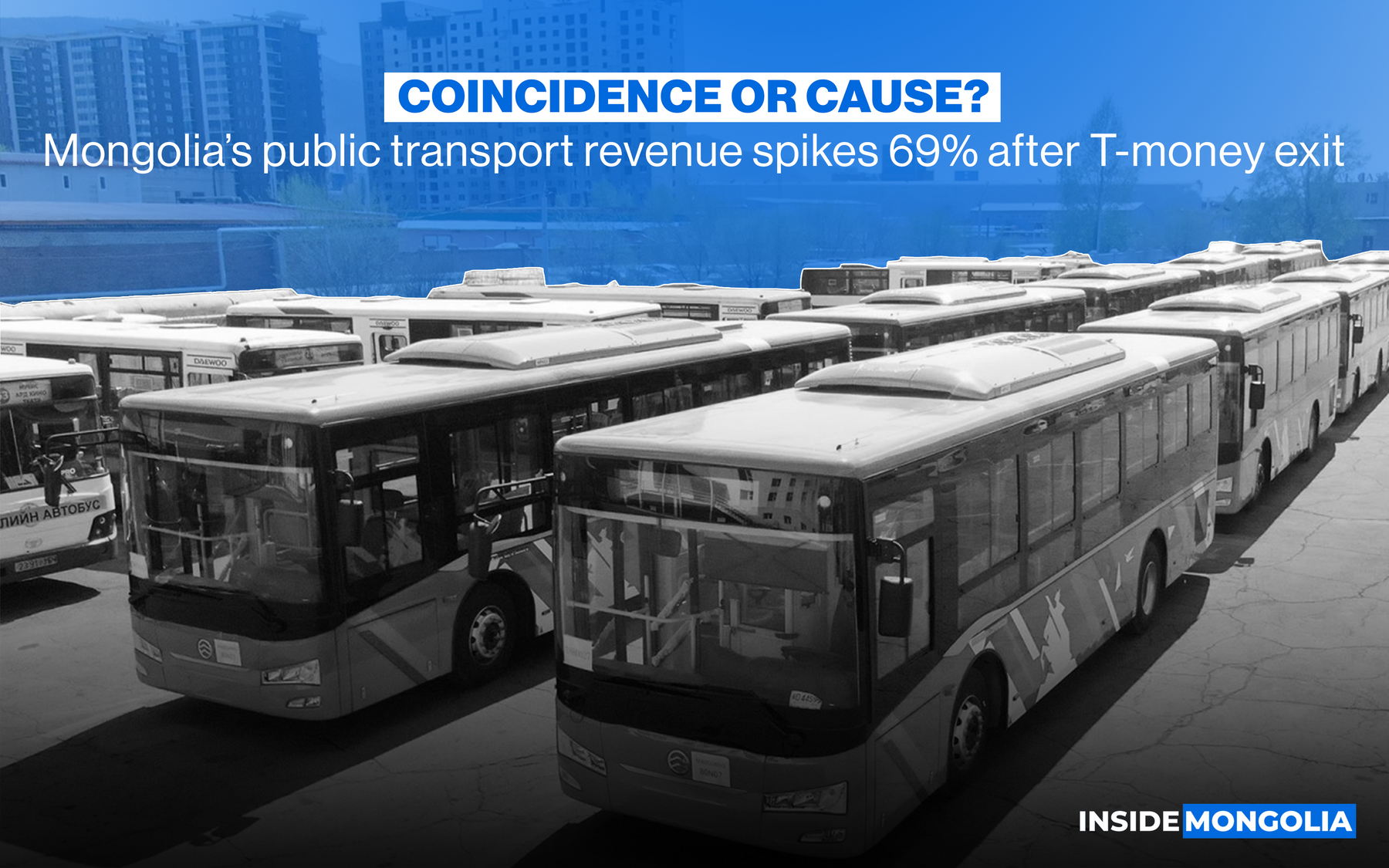
South Korea’s smart transit payment operator T-money has officially exited Mongolia, transferring its 55% stake in Ulaanbaatar Smart Card LLC to the city government in May 2025.
- 👉🏻 As a result, the city’s ownership rose from 24% to 79%, giving it full controlling rights over the capital’s public transport payment system.
📃 Briefing the History
T-money first entered Mongolia in 2015 to roll out the U-Money system based on Seoul’s model, managing card issuance, top-ups, fare settlement, and the system’s technical infrastructure. However, the project remained unprofitable for a full decade, recording an estimated ₩21.6 billion in cumulative losses.
- ⛓️💥 According to the company’s audit report, the main reason was structural, fares and service fees were largely determined by government policy, while fare increases were minimal over the years, making it difficult to build a commercially viable model.
💰 A Costly Exit, A Strategic Shift
Mongolia became one of T-money’s largest loss-making overseas projects. The company’s share of the loss from its 55% ownership is estimated at around ₩12 billion, including ₩4 billion in foreign exchange losses. The exit also reflects a broader strategic shift. After shutting down operations in the US in 2016, Malaysia in 2023, and now Mongolia in 2025, T-money appears to be moving away from directly owning overseas subsidiaries and instead repositioning itself as a technology provider and transport systems consultant.
🧐 After the Exit, Revenue Starts Climbing
In early 2025, Mongolia doubled public transport fares for the first time in 11 years, from ₮500 to ₮1,000, just months before T-money’s exit. Since gaining greater control, Ulaanbaatar has expanded the payment system beyond the U-Money card, allowing passengers to pay with bank cards, mobile apps, QR codes, or cash.
- 🤾🏻 The impact has been immediate. Public transport revenue rose from ₮33 billion in 2024 to ₮56.7 billion in 2025, marking a 69% increase. In the first 2 months of this year alone, revenue increased by ₮1.4 billion year-on-year, while passenger numbers climbed 8.5%.
Finally... After years of losses under the previous model, the sector is now beginning to show signs of financial improvement under city-led management. But who knows how long the city can sustain this achievement...
Comment