Mongolia Passes Transplant Law, but Gaps Persist
Khulan M.
May 11, 2026
May 11, 2026
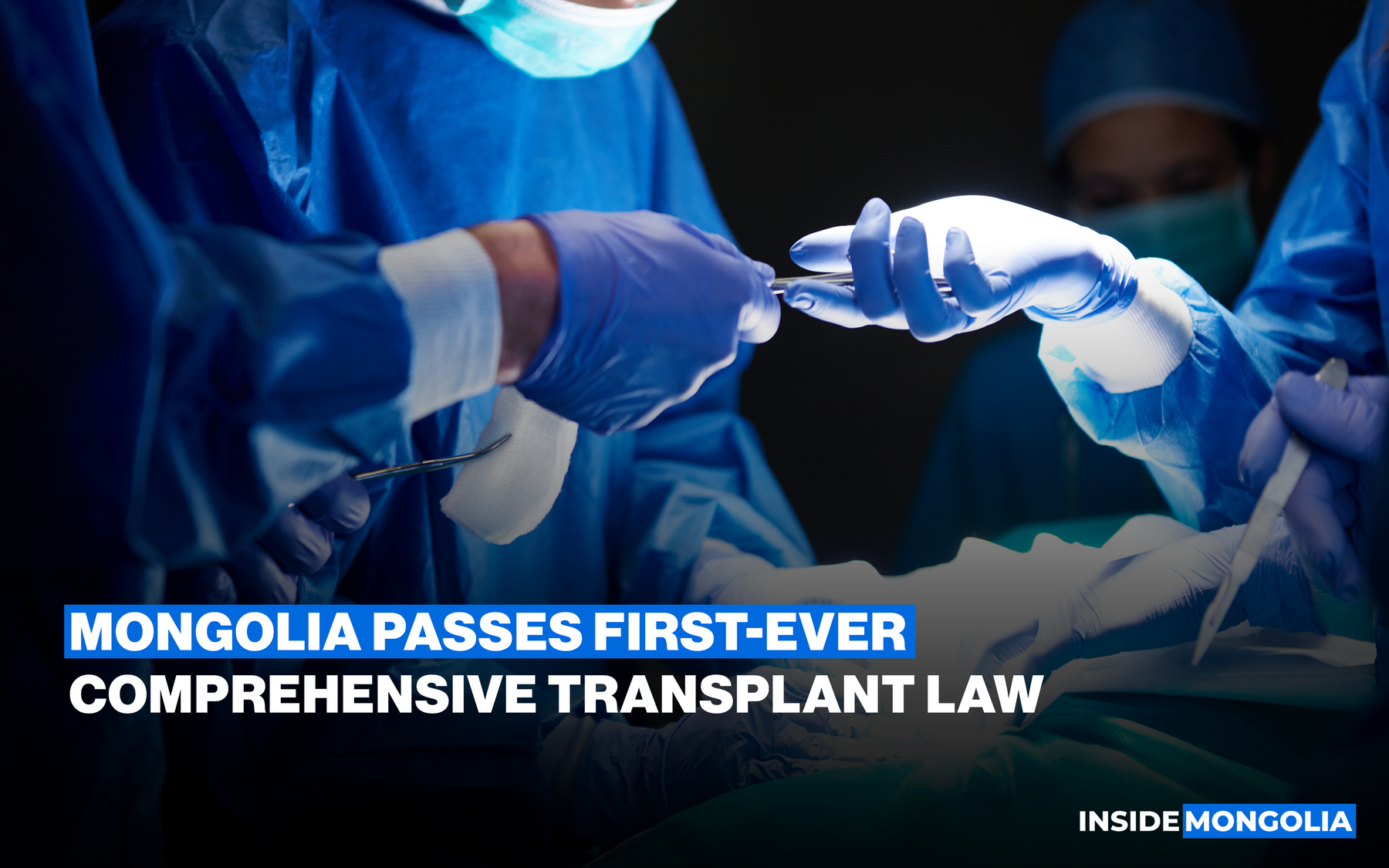
Last week, parliament approved a law on organ, tissue and cell transplantation, establishing Mongolia's first comprehensive legal framework for the sector. The move marks a step forward, though key uncertainties remain.
🏃♀️➡️ Expanding the System
The law formalizes a system previously governed by ministerial regulations and introduces provisions for biobanks, including the storage and use of cord blood, stem cells and tissues. It also adopts a presumed-consent approach, allowing organ donation after death unless individuals opt out during their lifetime, a shift that could help address a chronic shortage, as about 90% of transplants currently rely on living donors.
- 💰 Defining Roles and Incentives: The framework also separates the roles of donor and recipient hospitals and includes financial support measures for donors and their families.
- ❌ Implementation Challenges: Still, questions around implementation persist. Funding, staffing and equipment requirements are not clearly defined, and existing constraints, such as limited intensive-care capacity and underdeveloped systems for determining brain death, could hinder execution.
🤫 Unresolved Bottlenecks
The law also leaves unresolved long-standing bottlenecks, including donor registration and family consent procedures. Most notably, it does not specify the cost burden for recipients, instead leaving pricing to be determined by the government, raising concerns about equitable access.
Overall… While the legislation could expand donor supply and reduce waiting times, its effectiveness will depend on how it is implemented in practice.
Comment