Can Mongolia Diversify Its Heavy Reliance on Russian Fuel?

Khulan M.
August 3, 2026
August 3, 2026
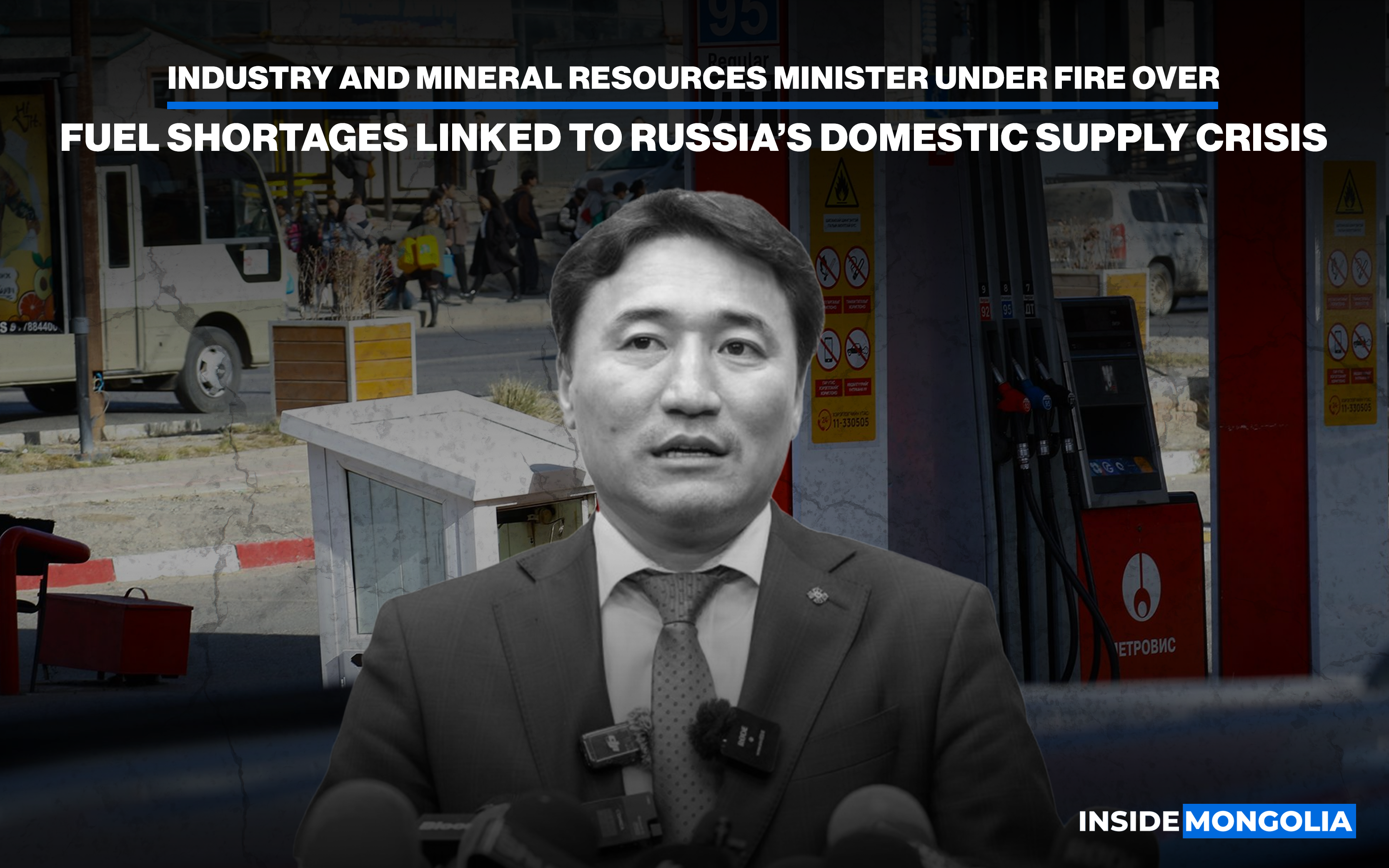
9 months ago, Minister of Industry and Mineral Resources D.Damdinnyam assured the public that “Gasoline will not run out.” Yet, starting last Thursday, long queues stretching several meters formed outside gas stations, while motorists across the country scrambled to find fuel.
🤔 What Went Wrong?
Mongolia imports its gasoline, diesel, and aviation fuel primarily from the Angarsk refinery, one of Russia's largest oil refineries owned by Rosneft. But as the war continues to disrupt Russia's energy sector, fuel supply interruptions have once again spilled over into Mongolia.
🔫 War Related Pressure: Authorities said petrol prices have risen by more than 30% over the past three consecutive months, making it impossible to maintain the previously agreed fixed-price arrangement with Russia. Fuel imports are now being purchased at Russian exchange prices.
🫨 As a result, the domestic price of AI-92 gasoline increased by ₮250–₮300 per liter, while diesel prices fell by ₮100–₮150 per liter.
👀 Looking Beyond Russia
The recent shortages have also accelerated Mongolia's push to diversify its fuel supply after decades of heavy reliance on Russia, which currently accounts for more than 90% of the country's refined petroleum imports.
A major breakthrough came on July 30, when Mongolia reached an agreement with South Korea to import 50,000 tons of petroleum products every month. The deal includes 20,000 tons of AI-92 gasoline, enough to cover more than 1/3 of Mongolia's monthly demand, 20,000 tons of diesel fuel, and 10,000 tons of jet fuel. The agreement builds on the momentum of South Korean President Lee Jae-myung's state visit in July and represents one of the most tangible outcomes of the 2 countries' expanding economic partnership.
➕ China has also emerged as an important alternative supplier. Mongolia has already secured an emergency shipment of 6,000 tons of gasoline, while imports of aviation fuel have begun and additional diesel and gasoline supplies are expected to follow.
Together, these moves signal a strategic shift in Mongolia's energy policy. Rather than relying on a single supplier, the government is seeking to build a more resilient fuel supply network capable of withstanding geopolitical shocks and future supply disruptions.
Comment