Mongolia’s Billion-Dollar Financing Week

Khulan M.
October 5, 2026
October 5, 2026
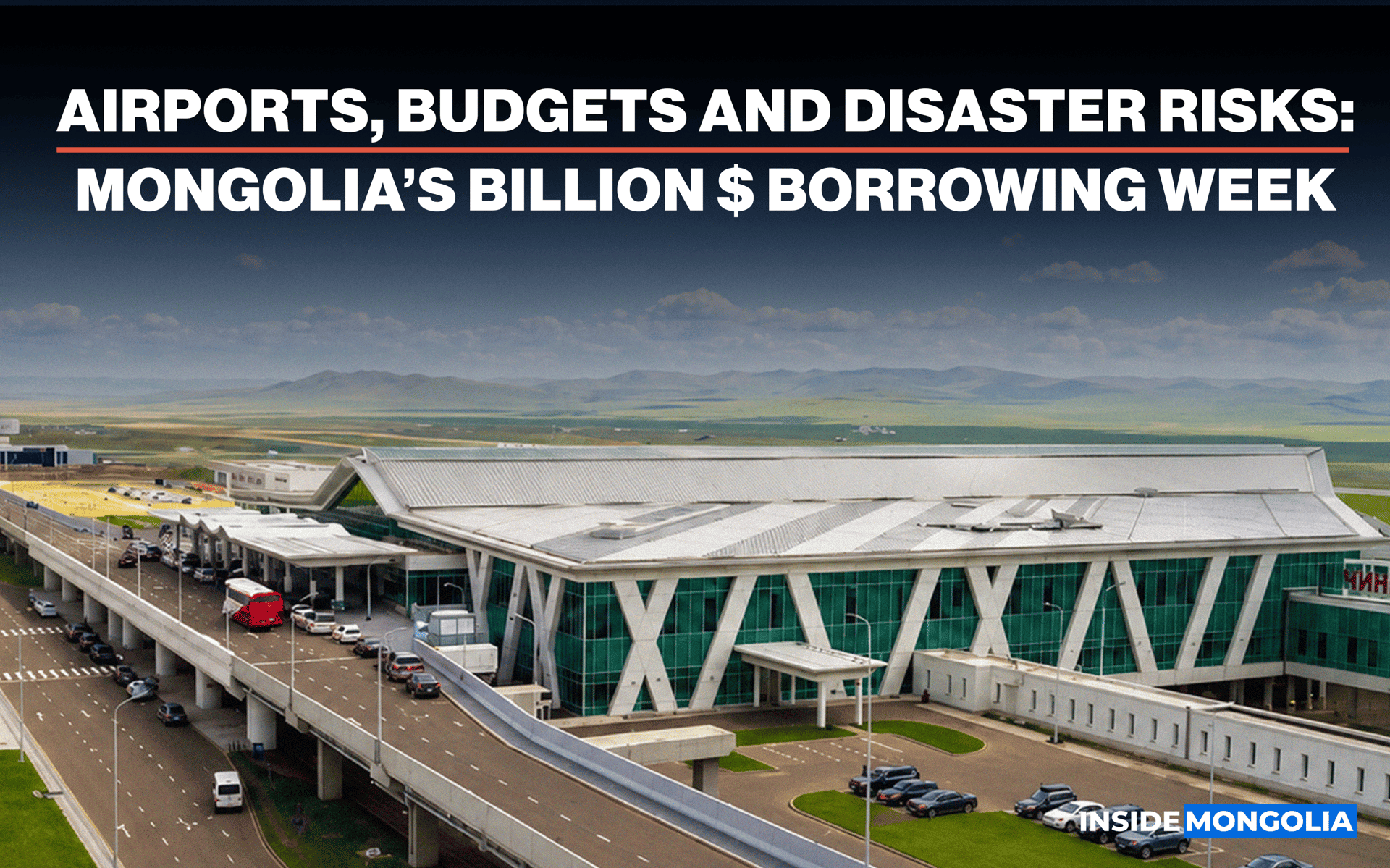
In recent days, several major loan financing decisions involving Mongolia have emerged in quick succession. The biggest is a concessional loan from the Japanese government to expand Chinggis Khaan International Airport, worth approximately $1 billion at current exchange rates.
- 💭 On top of that, the Asian Development Bank (ADB) has advanced several financing arrangements, including budget support, a contingent financing facility, and a separate loan to reduce disaster risks.
🎃 A Billion-Dollar Loan, All on Its Own
Japan’s ¥158.3 billion loan is the largest of these financing arrangements. The funding will go toward expanding the airport’s capacity and infrastructure, with an annual interest rate of 1.1%, a 40-year repayment period, and a 10-year grace period on principal repayments. In other words, the roughly $1 billion figure making headlines is not the combined value of several loans. It comes from this single airport expansion project.
✚ The Add-ons
Meanwhile, the ADB has announced plans to provide up to $1.3 billion in financing for Mongolia by 2027. This includes $455 million in newly signed loans, $225 million for provincial health services, $130 million for education and $100 million for disaster resilience. The ADB has also advanced a $200 million budget-support package and a contingent financing facility of up to $250 million, which Mongolia could access if needed. The contingent facility would not become debt upfront unless drawn.
🤔 More Debt or Investment for Growth?
Rather than focusing solely on how many billions Mongolia is borrowing, the more important questions are what terms the financing comes with, when the funds will actually be disbursed, what economic returns they could generate, and how much debt-service pressure they could add to the budget over time.
Comment