+158% in 10 years: Meat Prices are Soaring in Mongolia

Khulan M.
April 19, 2026
April 19, 2026
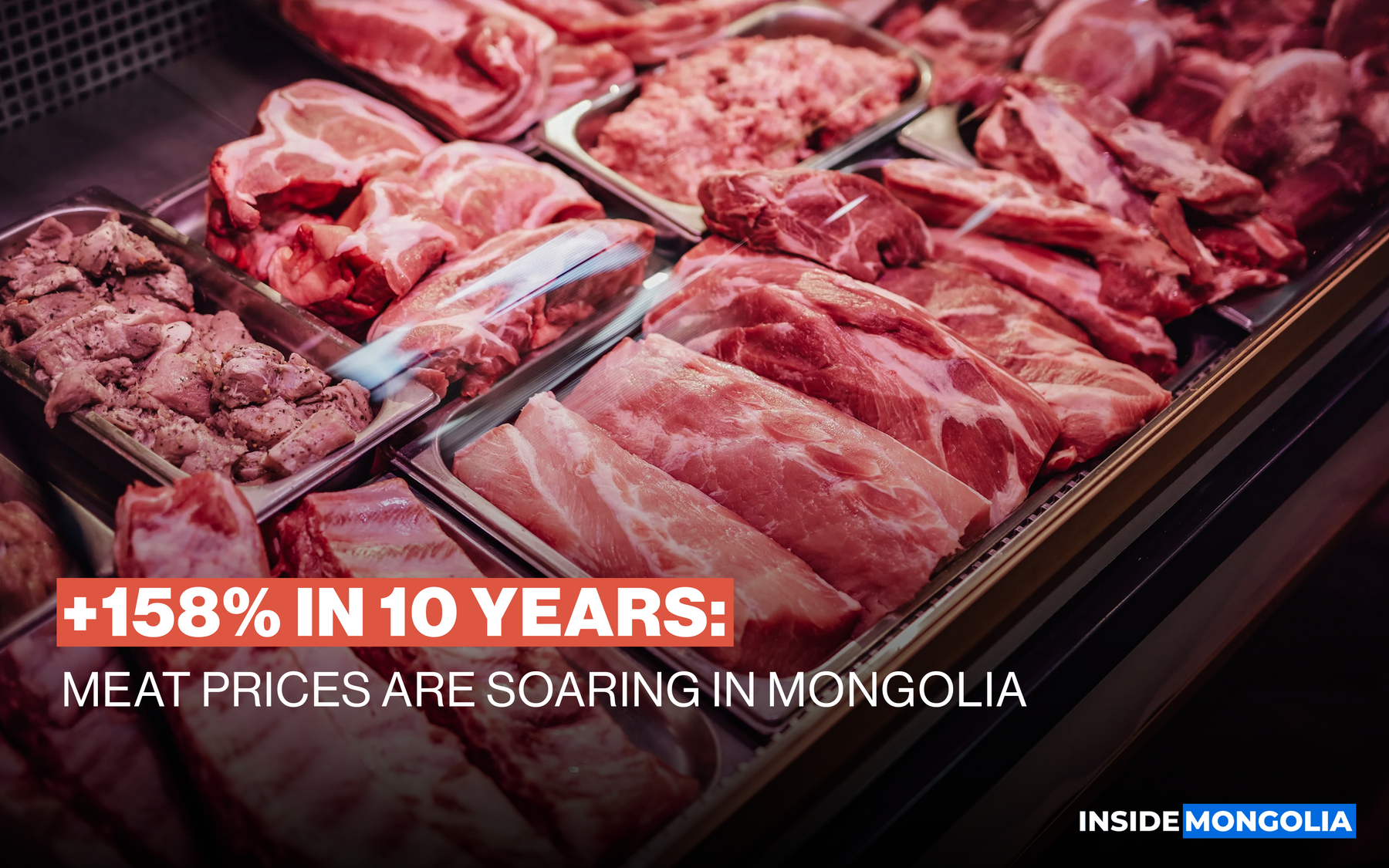
Despite having 58.1 million livestock, Mongolia continues to see rising meat prices. How much have they increased, and what’s driving the surge?
🥴 A Decade Ago: The “Good Old Days”
Around this time in 2015, boneless beef was priced at about ₮10,300 per kg. Today, it has surpassed ₮30,000. Bone-in beef used to cost around ₮8,500, while horse meat was under ₮6,000. Over the past 10 years, meat prices across all types have risen by an average of 158%.
- ❤️🩹 The “Golden Period” of Deflation: Taking 2015 as a base year, meat prices reached historic lows between late 2015 and early 2018. Specifically, from December 2015 to the end of 2016, mutton and goat meat prices dropped by 40%–46% compared to 2015 levels.
- 🥵 The Turning Point: From 2019 onward, prices stopped declining and began to rise sharply. By mid-2021, horse meat prices had doubled for the first time. Meanwhile, prices of mutton and beef, the most consumed meats in Mongolia, have seen the steepest, almost vertical increases over the past 2 years.
🥊 Import Dynamics and Price Gap
Interestingly, while domestic meat prices have continued to climb, imported chicken prices have remained relatively stable, even declining from their 2022 peak. This highlights how domestic meat prices are more exposed to fluctuations driven by logistics, processing, and other cost pressures.
🔑 Where Does the Money Go?
Even though livestock per capita remains extremely high, rising meat prices are not translating into higher income for herders. Instead, costs such as transportation, fuel, storage, and multiple layers of intermediaries are driving prices up. As a result, herders feel underpaid, while consumers feel overcharged, creating a system where both sides lose.
Lastly… Even Mongolians themselves are wondering, despite having more livestock than ever before, why are meat prices still skyrocketing? It all comes down to the urgent need to develop modern logistics, cold storage infrastructure, and digital platforms that can properly connect herders with consumers. Unless Mongolia acts on this, its people will remain like beggars sitting on a mountain of gold.
Comment